Akshatha K Vydula

Postdoctoral Researcher · University of Richmond

I primarily specialize in observational cosmology and study Cosmic Dawn and the Epoch of Reionization using low-frequency radio telescopes. I am also currently leading the efforts for making a low-frequency skymap using Green Bank Telescope with a custom feed and receiver system. Besides the actual scientific discovery part, I find the outreach and making science accessible part equally exciting and gratifying.

I grew up in a small town in Karnataka, India, went to high school in Raichur, and moved to Bengaluru for my undergrad in Electronics & Communication Engineering at RV College of Engineering. I graduated in 2020 ranking 3rd in the University, with my thesis on “Search for Galactic and high redshift absorption lines with LOFAR.” I then moved to Tempe, Arizona, where I earned a Ph.D. in Astrophysics from the School of Earth and Space Exploration at Arizona State University. At ASU, my research involved precision measurements of three different science cases at three vastly different dynamical scales: Exploring the Fundamental Physics of the Universe Across Dynamic Scales. I am currently a Postdoctoral Researcher at University of Richmond.

Curriculum Vitae Send me a message

Akshatha Vydula

Research

Low frequency radio

Cosmic Dawn & Epoch of Reionization

Studying the first stars and galaxies with the 21 cm signal and the EDGES Collaboration.

Click for more

One of my primary research interests is the phase of the Universe when the first stars and galaxies formed, roughly 300 million years after the Big Bang. The hydrogen spin–flip transition (21 cm, 1420 MHz), redshifted into the radio band (z ≈ 6–30, 50–200 MHz), encodes the thermal and ionization history of the intergalactic medium. Detecting this signature is extremely challenging—the signal is 6–8 orders of magnitude fainter than foregrounds.

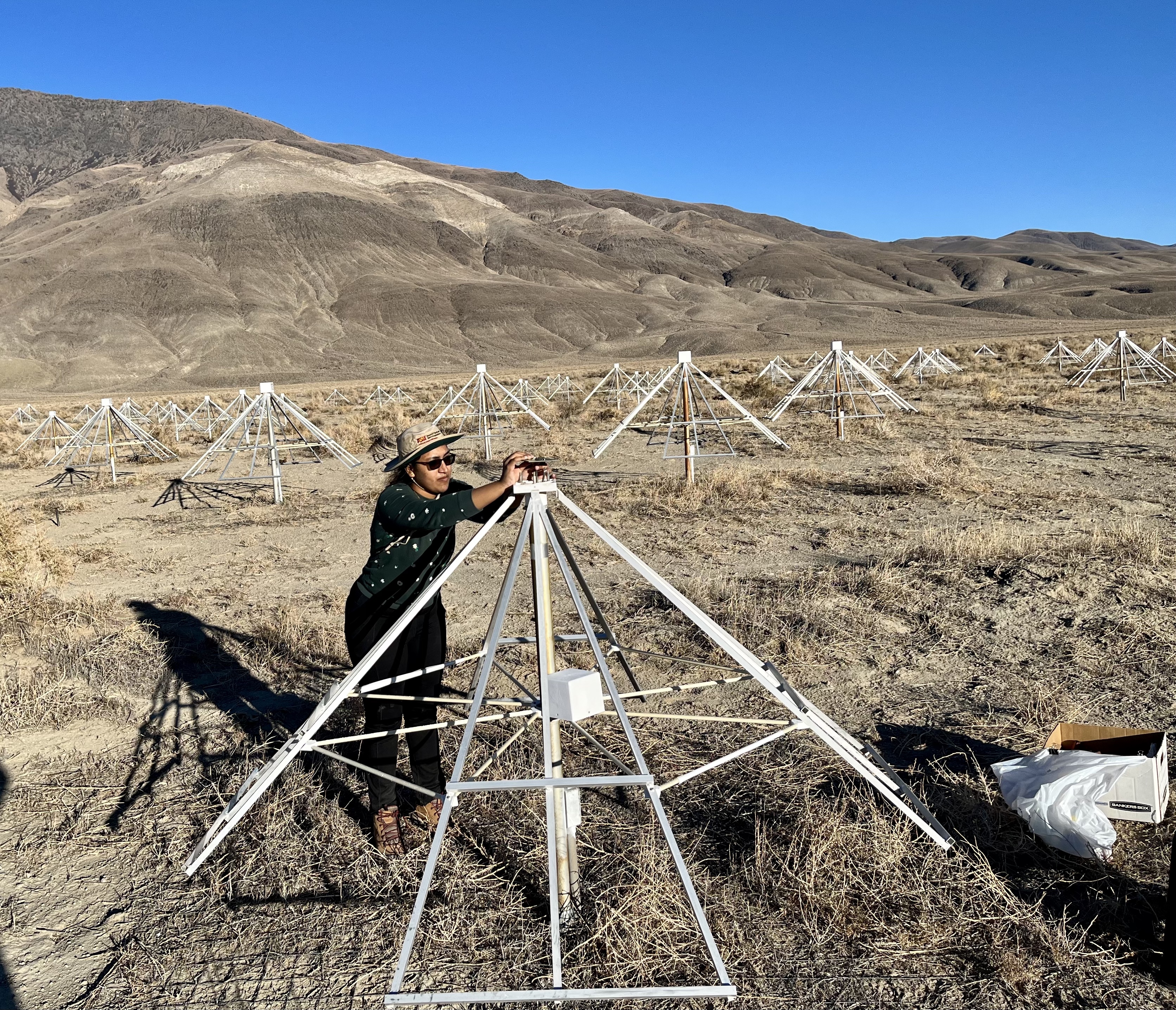
I am a member of the EDGES Collaboration. The Experiment to Detect the Global Epoch of Reionization Signature (EDGES) is a single-antenna, low-frequency radio experiment at Inyarrimanha Ilgari Bundara (CSIRO Murchison Radio-astronomy Observatory). I primarily work with EDGES-3, which began operating in November 2022.

310 MHz feed

Absolutely Calibrated Sky Map at 310 MHz

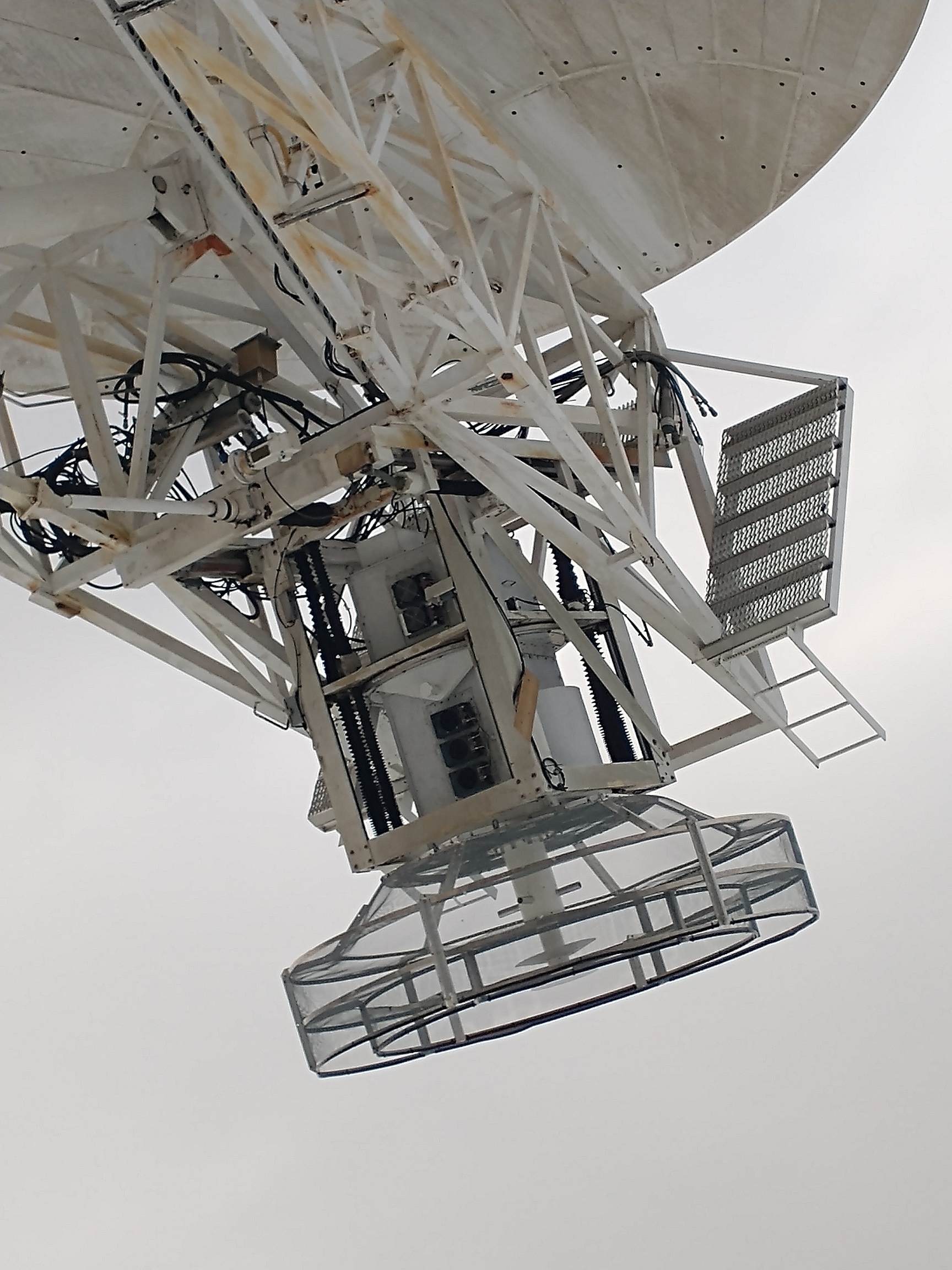
Developing a new low-frequency sky map with the Green Bank Telescope.

Click for more

Sky maps are fundamental for radio astronomy, but at very low frequencies we lack an absolutely calibrated map with a well-defined zero level. I collaborate with the University of Richmond and NRAO to address this gap. Using the Green Bank Telescope in West Virginia, we are developing a sky map at 310 MHz with a custom feed and receiver system.

Radio Recombination Lines

Low Frequency Radio Recombination Lines

Spectral signatures from C and H atoms and their impact on 21 cm measurements.

Click for more

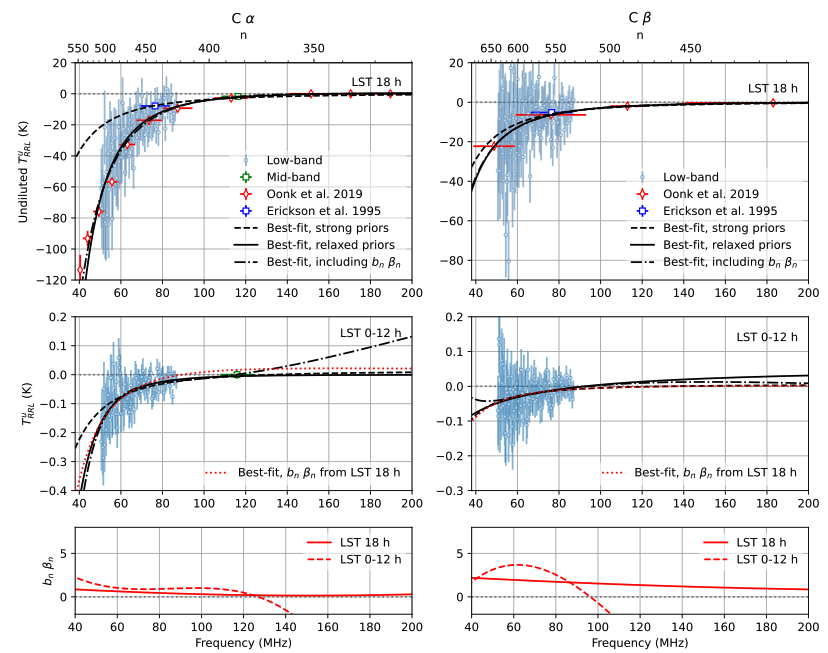
Radio Recombination lines (electron transitions in Rydberg atoms) help probe star formation and gas density/temperature. Low frequency RRLs (<150 MHz) in Carbon and Hydrogen are of particular interest as possible foregrounds for Cosmic Dawn and EoR 21 cm measurements. I use EDGES data to detect these signatures and study their effects on global and power-spectrum measurements of the redshifted 21 cm signal.

Read more in The Astronomical Journal, or check out the summary on YouTube: AAS Journal Author series.

VLA beam

Beam Calibration (LWA / VLA)

Pulsar gating and beam mapping for precision EoR and Cosmic Dawn experiments.

Click for more

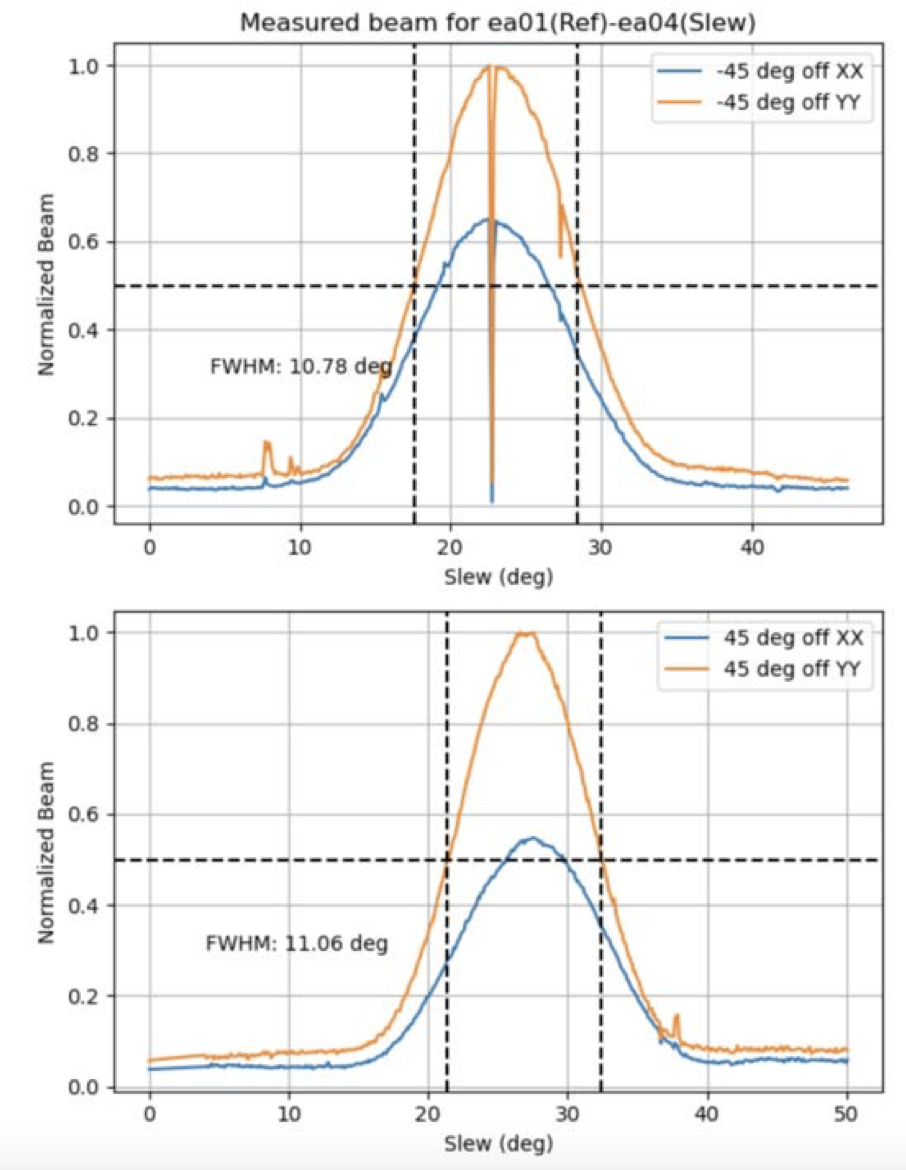
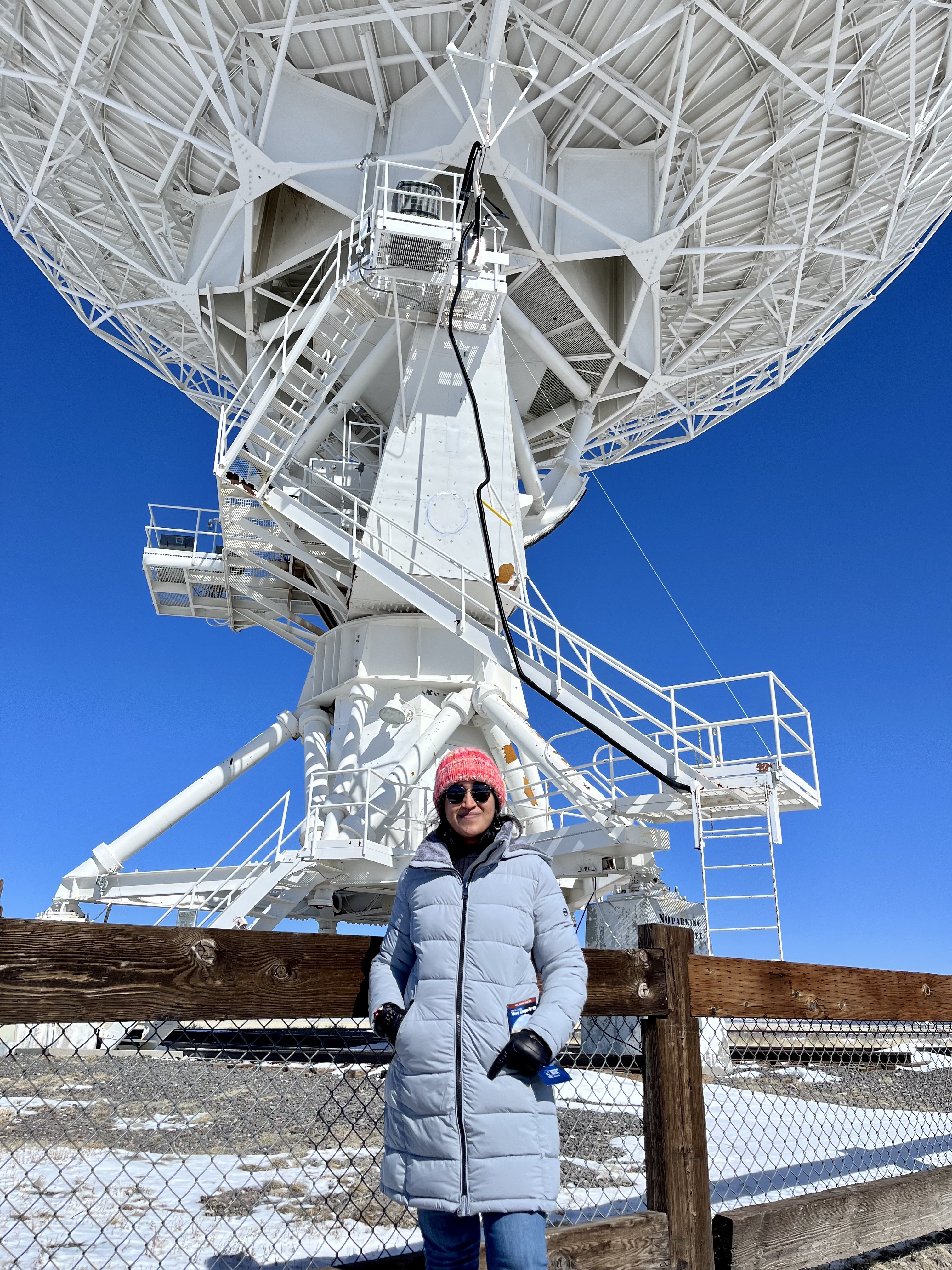
For ground-based interferometers, a precise understanding of the antenna beam is essential. I work with the VLA, LWA (New Mexico), and OVRO-LWA on beam mapping. I have studied a novel Pulsar Gating method of beam calibration that maps the average antenna beam in spatial and spectral axes.

Read more about this work in the eVLA Memo #228.

Neutron lifetime

Neutron Lifetime (Space-based)

Lunar Prospector data and Monte Carlo modeling for neutron lifetime measurement.

Click for more

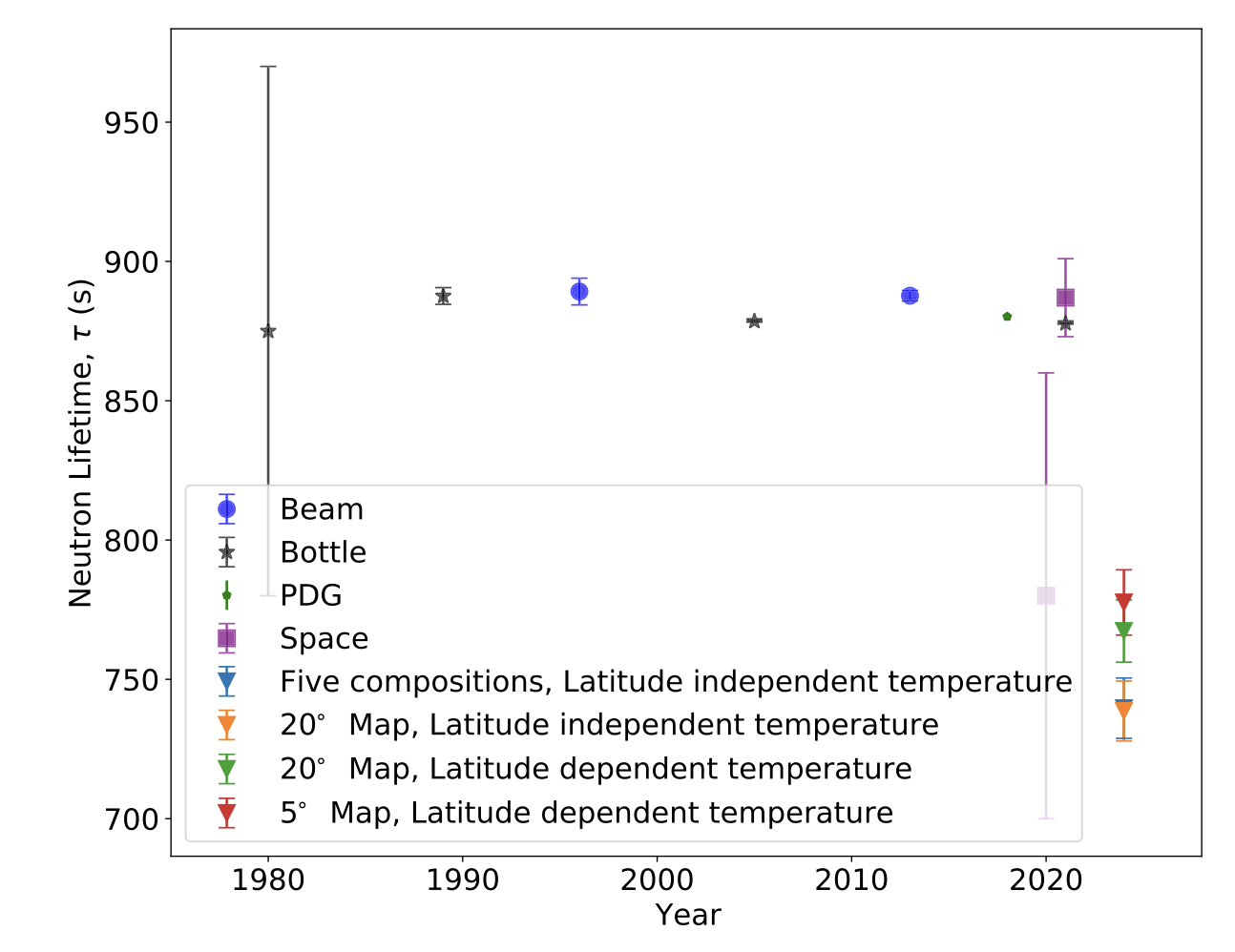
The free neutron lifetime is measured by two methods that disagree by over 5σ—with implications for Big Bang Nucleosynthesis. As a Graduate Research Associate at Los Alamos National Lab, I made a space-based measurement using Lunar Prospector (1998–1999) data. The technique uses cosmic-ray interactions with the lunar subsurface that emit gravitationally bound neutrons. I use Monte Carlo simulations to model neutron emission; combined with orbital information, this constrains the neutron lifetime. My work on lunar surface composition and temperature systematics is the most detailed study of such uncertainties to date.

Read more in Physical Review C.

Publications

My publication list is maintained on Google Scholar and ORCID and updates as new work is published.

Community

Affiliations:

Radio Astronomy Bootcamp

Teaching

Click for more
Summer Sundial

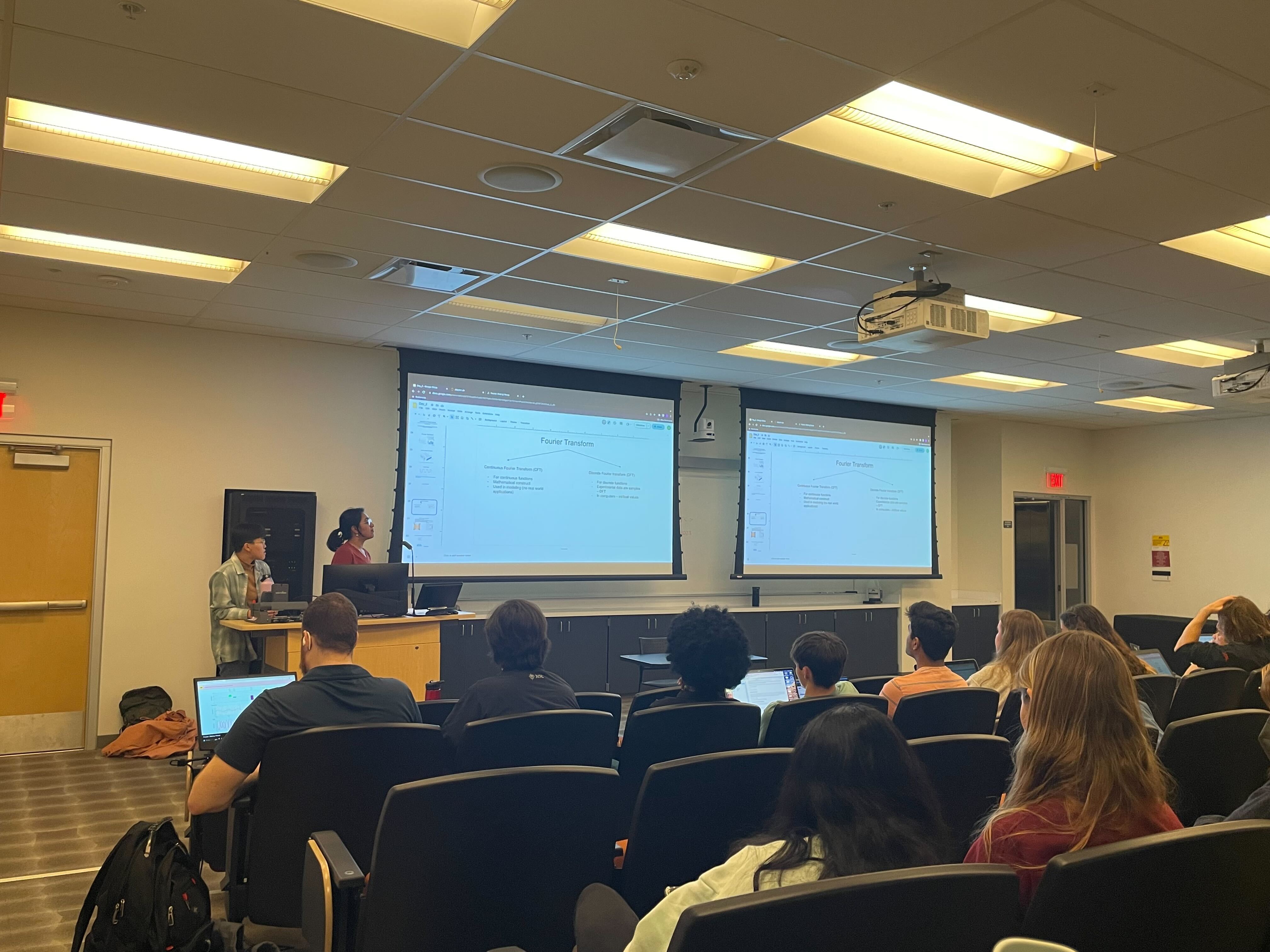
Radio Astronomy Bootcamp — I helped design and teach a week-long evening class on Radio Astronomy (Python, Fourier transforms, data analysis) for undergraduates.

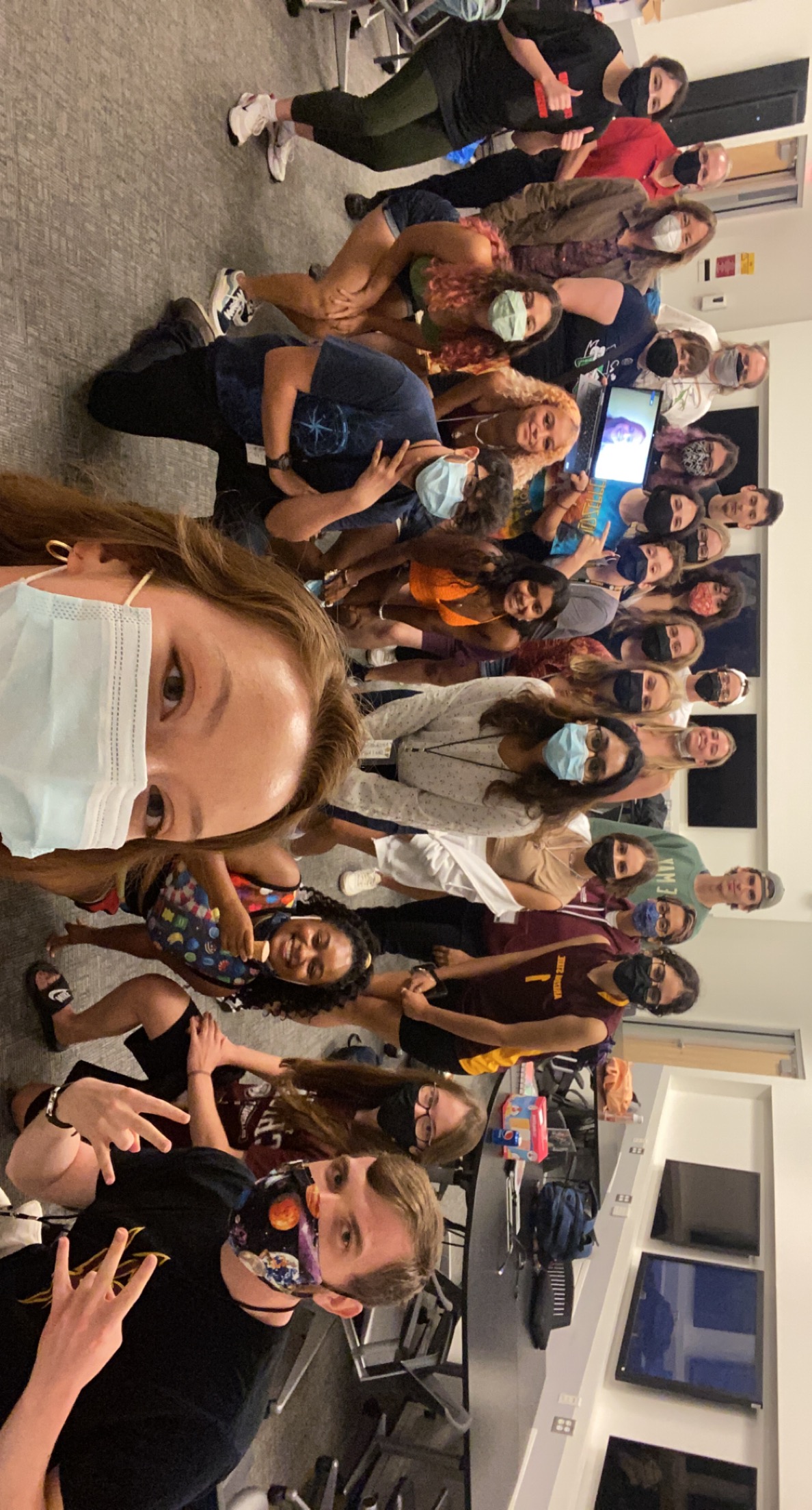
Summer Sundial 2021 & 2023 — I helped design and teach a 2-week Astrophysics bootcamp for freshmen in Maths, Physics and Astrophysics. Short video.

Substitute Teacher for Astronomy 121 class — I was a substitute teacher for the Astronomy 121 class, offered by University of Richmond.

Outreach

Outreach

Click for more

SESE Outreach — I help organize outreach for the Low Frequency Cosmology lab at SESE public engagement events (typically 2 events/semester).

Broadmor Science Fair Judge (Mar 15, 2022).

Public talks:

1. Studying Early Universe using Low Frequency Radio Telescopes — Grad-to-Grad Colloquium, Dept. of Physics, ASU (Apr 29, 2022)

2. Studying Early Universe as an Engineer turned Radio Astronomer — Cosmic Chronicles, RV College of Engineering, India (Sep 6, 2022)

3. Space Archaeology: 21 cm and the early Universe — Annular Solar Eclipse 2023 county science outreach, Kanab Utah (Oct 14, 2023)

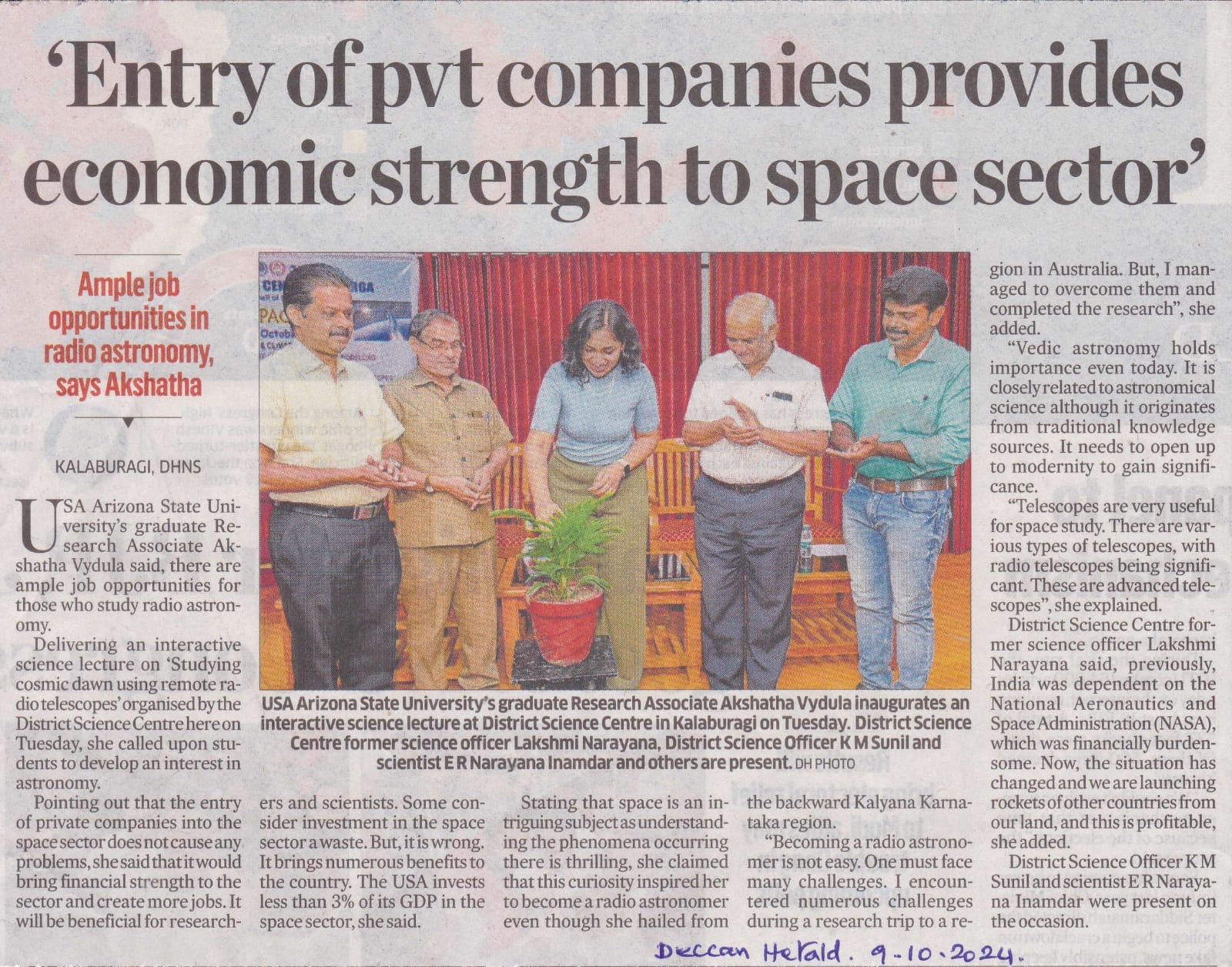
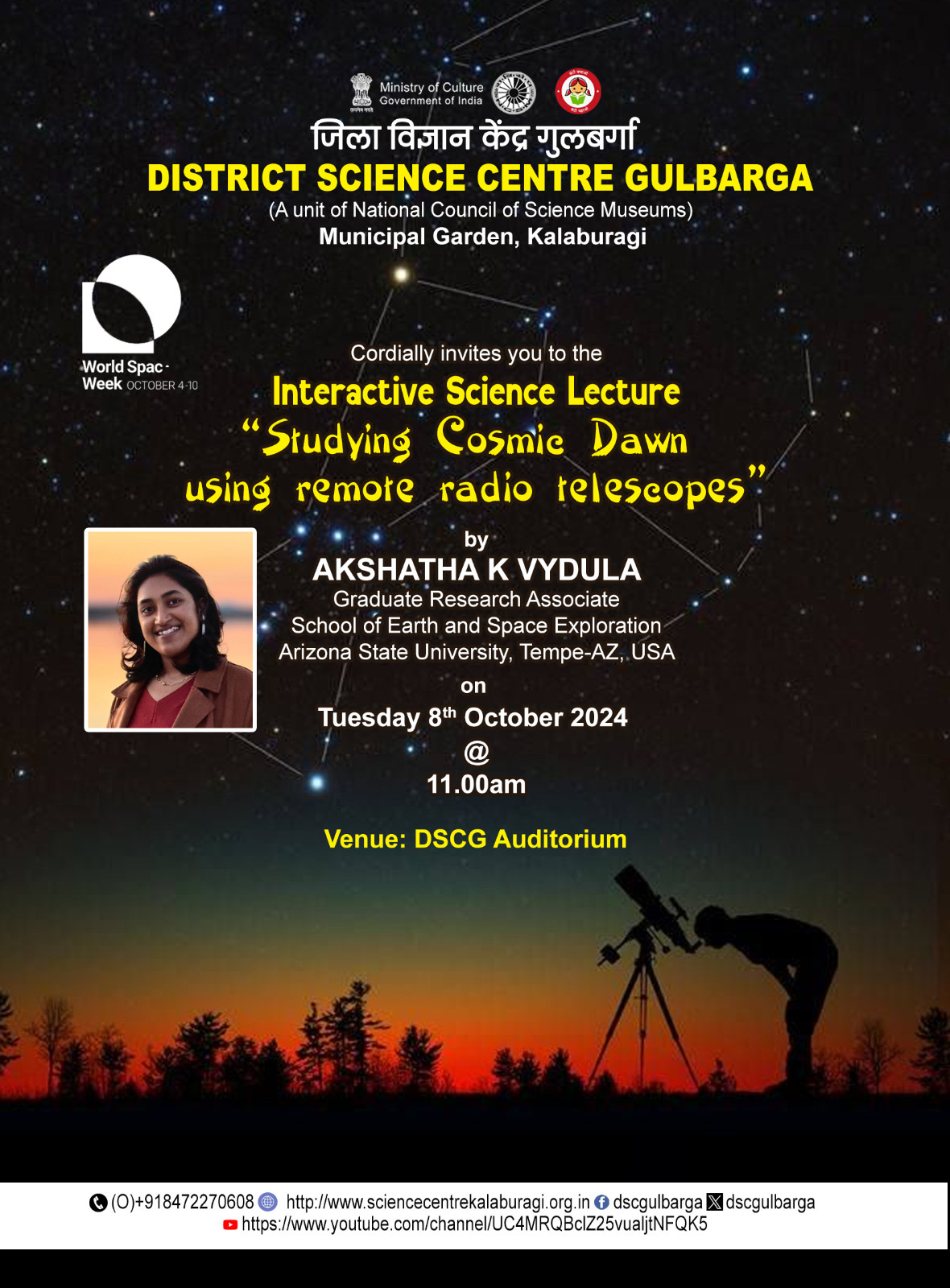
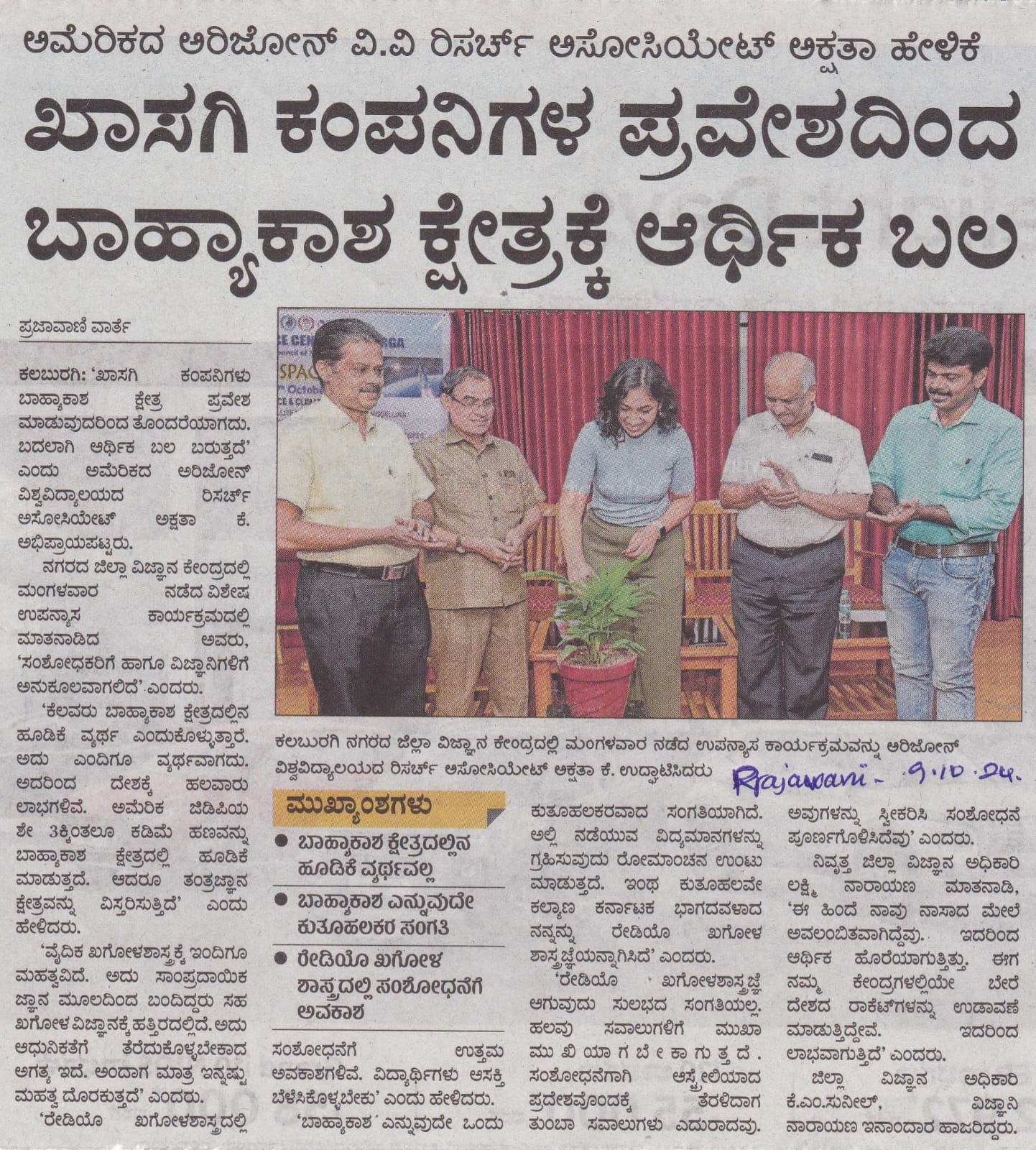
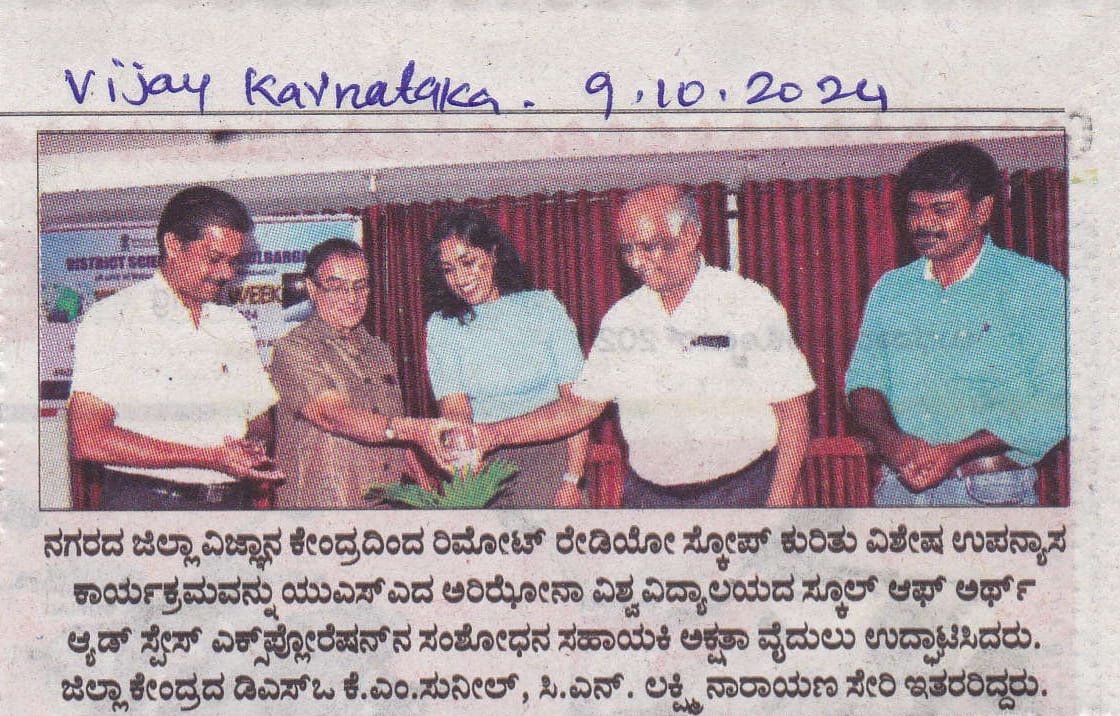
4. Studying Cosmic Dawn using remote Radio telescopes — Gulbarga Science Center, India (Oct 8, 2024)

5. A Day in the life of a Radio Astronomer — RV College of Engineering (Oct 15, 2024)

6. Space Archaeology: early Universe with remote radio telescopes — San Jose Astronomy Association (Oct 19, 2024)

7. Radio Astronomy techniques for the Global 21 cm signal — Karnataka Physics Teachers Association (Nov 24, 2024)

For the full list of talks and meetings, check out Meetings.

Media

Media

Click for more
Bharat Gaurav Puraskar award
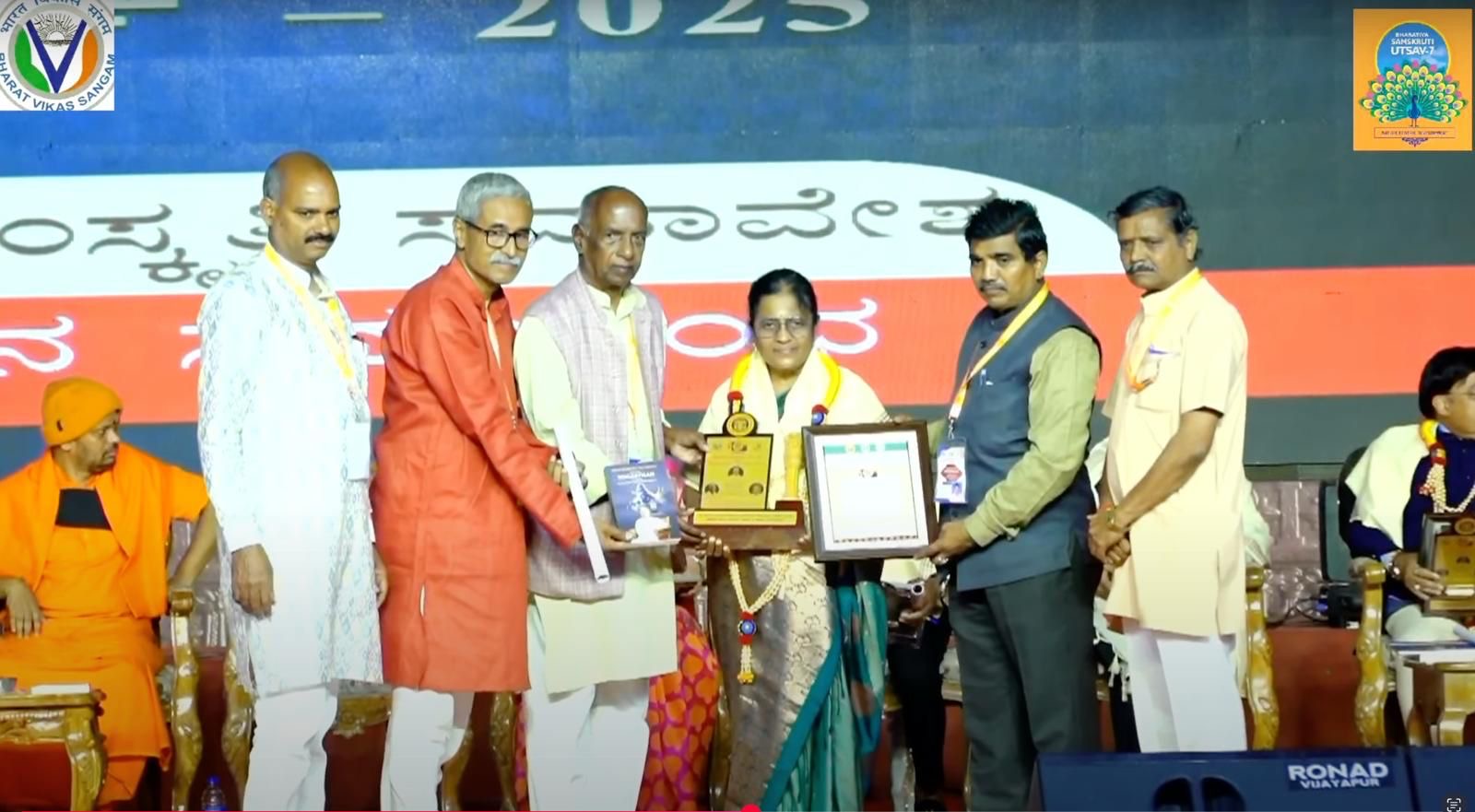
For contributions to astrophysics and science communication, I was honored with the Bharat Gaurav Puraskar and recognized as one of the 35 Under 35 Non-Resident Indians by the Bharat Vikas Foundation in February 2025. My mother received the award on my behalf.

Podcast: Engineer turned Astrophysicist (career pivot).

Interview: Understanding the Early Universe using 21 cm signal, Forest Voices of India.

References

Academic and professional references.

Past references (pre-PhD)

Meetings

Log of meetings, workshops, conferences, and site visits.

32. LuSEE-Night Collaboration Meeting, Space Science Laboratory, Berkeley CA - Mar 26-27, 2026
31. Experimental Frontiers in Low-Frequency Radio Cosmology, Vassar College, Poughkeepsie NY - Feb 27, 2026
30. The Invisible Universe, Richmond Astronomy Club - Feb 10, 2026
29. MARLAM2025, George Washington University, Washington DC - Jan 28, 2026
28. First On-sky measurements of 310MHz receiver, Green Bank Observatory, WV - Jan 12-16, 2026
27. 247th AAS meeting, Phoenix AZ - Jan 4-8, 2026
26. RFI testing for 310MHz receiver, Green Bank Observatory, WV - Oct 28, 2025
25. University of Richmond Department of Physics Colloquium - Oct 22, 2025
24. 8th Global 21cm Workshop, Caltech, Pasadena - Sep 22-25, 2025
23. New Avenues in Particle Cosmology, Winchester UK (May 20, 2025)
22. 2025 National Radio Science Meeting, Boulder, CO - Jan 7-10, 2025
21. Radio Astronomy techniques to measure the Global 21cm signal from the early Universe Karnataka Physics Teachers Association (Nov 24, 2024)
20. San Jose Astronomy Association (SJAA) Oct 19, 2024
19. A Day in a life of a Radio Astronomer at RV College of Engineering (Oct 15, 2024)
18. Studying Cosmic Dawn using remote Radio telescopes at Gulbarga Science Center, India (Oct 8, 2024)
17. 7th Global 21cm Workshop, Raman Research Institute, Bengaluru - Sep 30-Oct 04, 2024
16. Caltech Lunch Seminar - July 9, 2024
15. Space Archaeology: Using 21cm signal to study the early Universe at Annular Solar Eclipse 2023 county science outreach, Kanab Utah (Oct 14, 2023)
14. 19th Synthesis Imaging Workshop - Jun 12-22, 2023 - NRAO Charlottesville, VA
13. LWA Users Meeting 2023 Jun 2-3, 2023 - University of New Mexico, Albuquerque NM
12. VLA 4-band beam measurement campaign (using holography) - May 29-Jun 1, 2023 - NRAO Array Operations Center, Socorro NM
11. LWA single dipole beam measurement campaign with Drones (part of ECHO/External Calibrator for Hydrogen Observatories) - May 22-27, 2023 - Owens Valley Radio Observatory CA
10. 38th Annual New Mexico Symposium - Feb 17, 2023 - NRAO Array Operations Center, Socorro NM
9. Beam workshop for the Long Wavelength Array (part of Beam Dream Team series of meetings) - Jan 18-22, 2023 - Owens Valley Radio Observatory CA
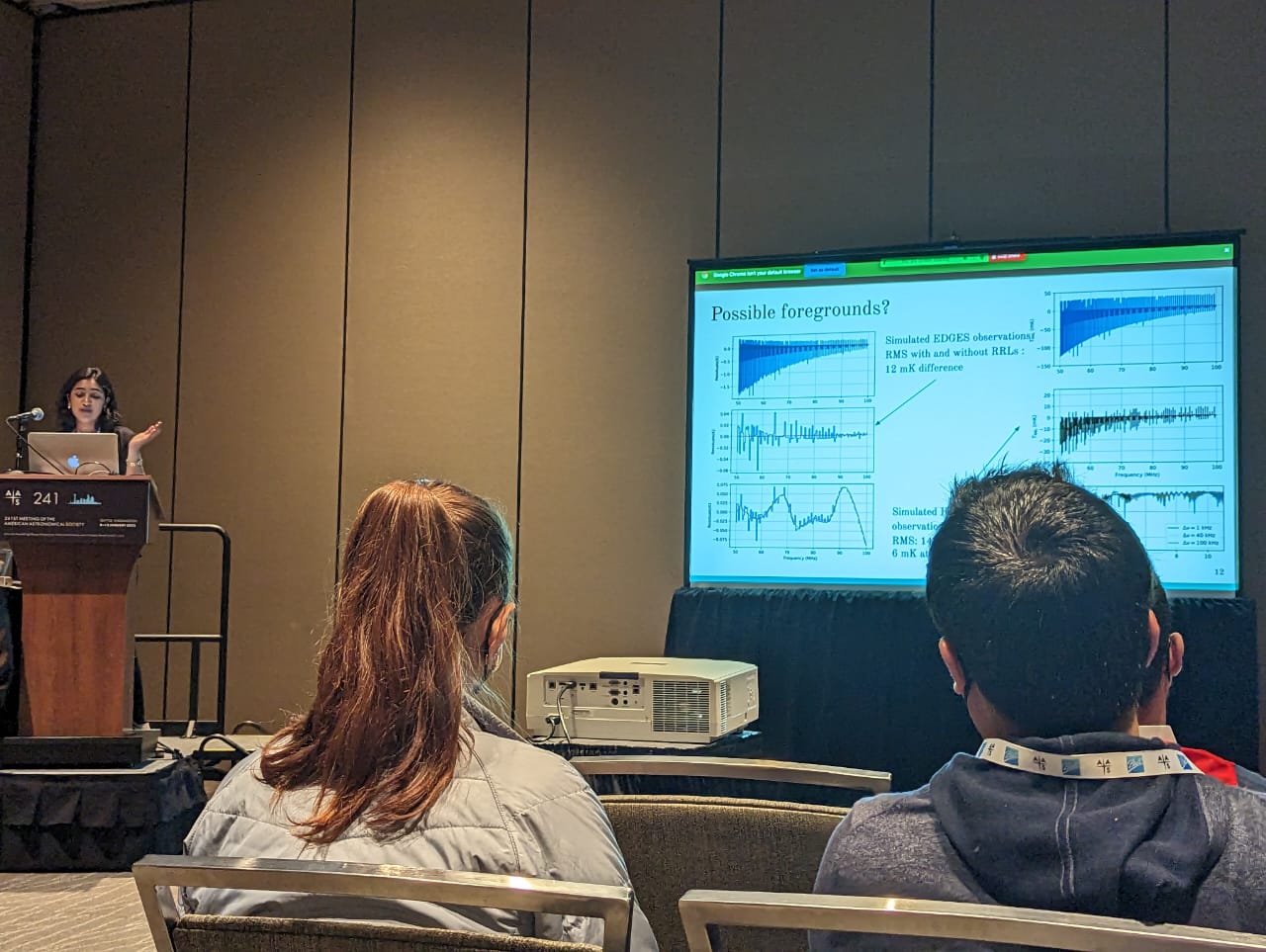
8. 241st AAS Winter Meeting - Jan 8-12, 2023 - Seattle WA
7. 5th Global 21cm Workshop - Oct 17-20 - UC Berkeley CA
6. Studying Early Universe as an Engineer turned Radio Astronomer at the Cosmic Chronicles talk series, RV College of Engineering, India (Sep 6, 2022)
5. Intelligent Space Research-1 (Space Science and Applications) Colloquium - Jul 19, 2022 - Los Alamos NM
4. Studying Early Universe using Low Frequency Radio Telescopes at Grad-to-Grad Colloquium, Dept. of Physics, ASU (Apr 29, 2022)
3. Front-end electronics upgrades for LWA - Nov 2021 - Owens Valley Radio Observatory CA
2. SESE Annual Symposium - Aug 18, 2021, SESE ASU - Tempe, AZ
1. Los Alamos National Lab Summer Symposium - Aug 3-4, 2021, Los Alamos, NM
Hobbies

Hiking · Cooking · Coffee · Hindustani semi-classical music

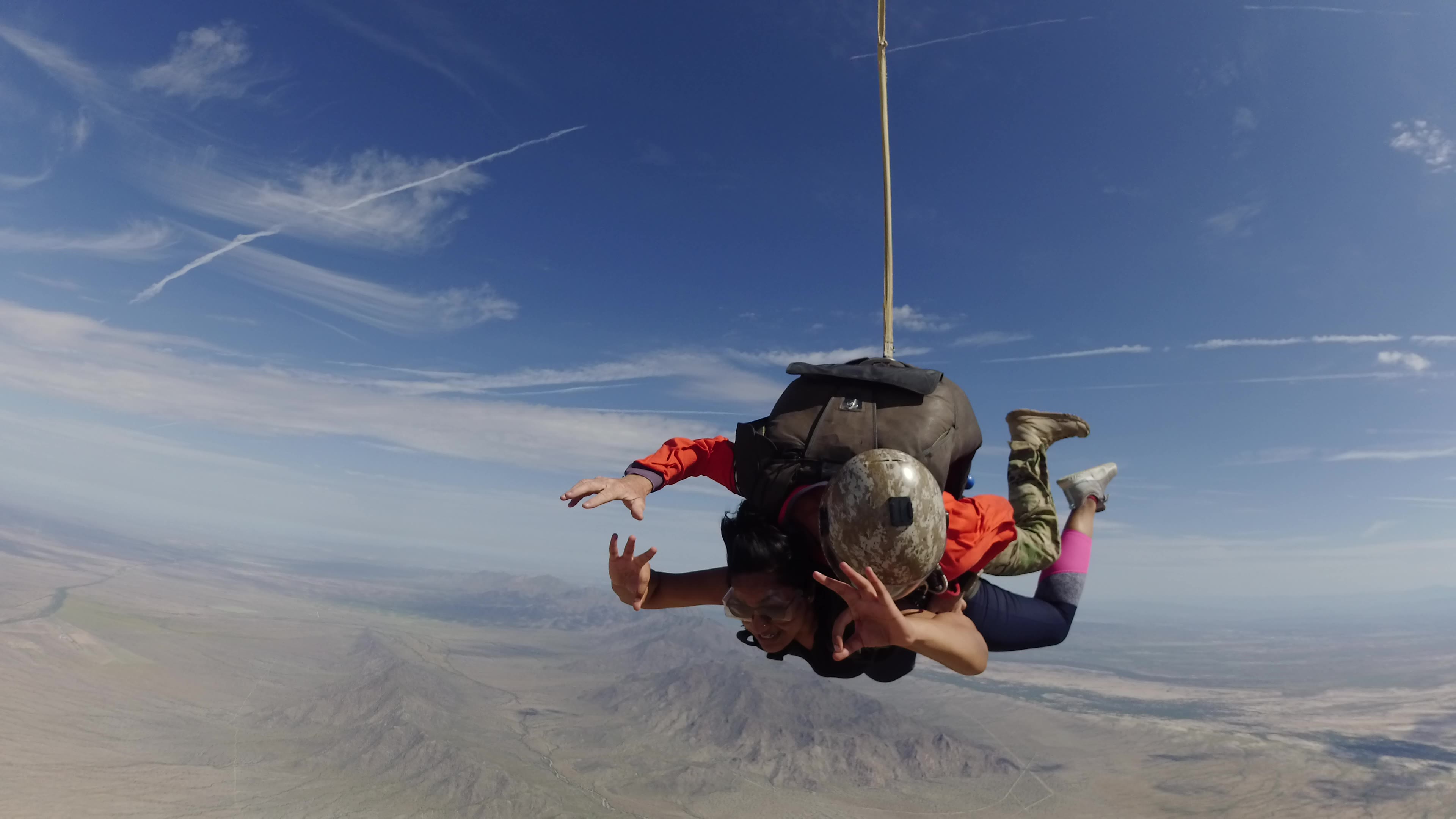
I love the outdoors! When I'm not analyzing radio astronomical data, you'll likely find me hiking, backpacking, or doing something adventurous—like skydiving. Through my husband, I've also developed an interest in cars and racing (see 86Challenge and 404:Brakes Not Found). I'm passionate about espresso and enjoy getting technical about it. My ideal shot comes from a freshly medium-roasted coffee (preferably from a local roastery), extracted at a 2.25 ratio in about 26–32 seconds. I have a soft spot for '60s music and rarely miss my daily NPR Up First. I also enjoy Carnatic fusion and am currently training in Hindustani semi-classical vocals.

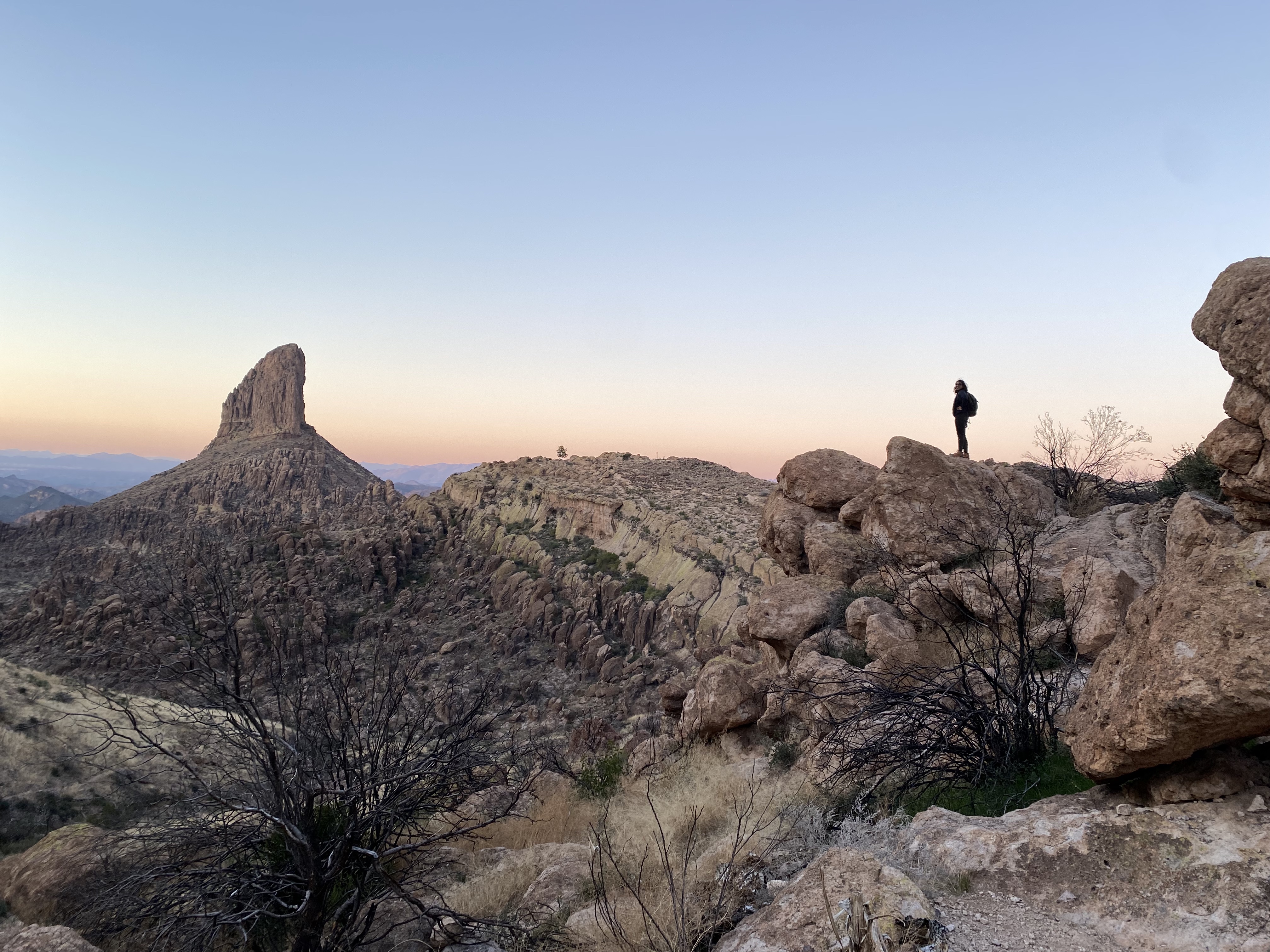
I enjoy a good weekend or a day hike. Here are some of the bucket-list hikes and moments.

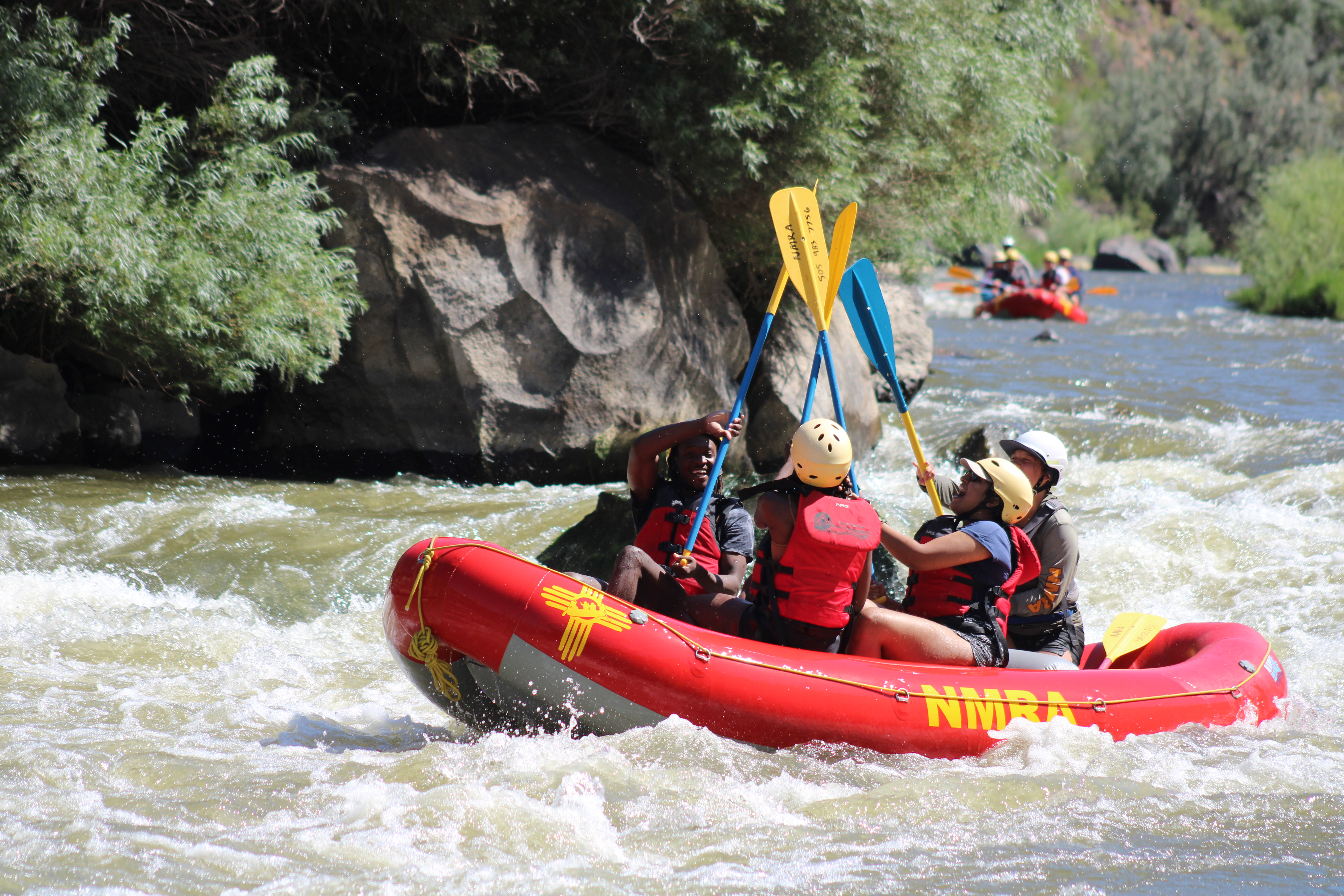
Mountain River rafting Humphreys Peak Angels Landing Auroras Wheeler Peak Coffee Cooking Skydiving

Contact

Email: akshatha.vydula@richmond.edu

Address:
University of Richmond
Gottwald Center for the Sciences, Room D114A
Richmond, VA 23173